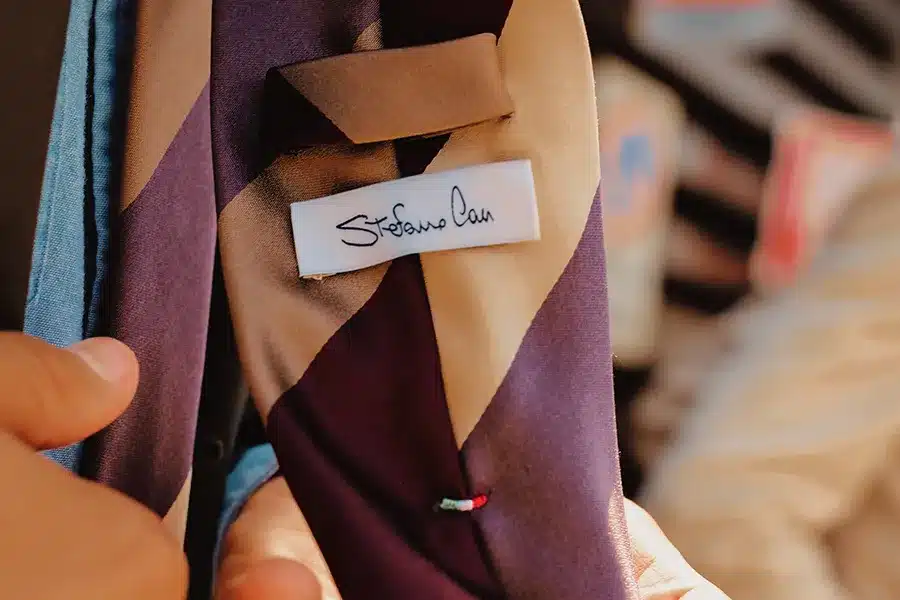
Yousuke Yamashita – A Stefano Cau Style Interview
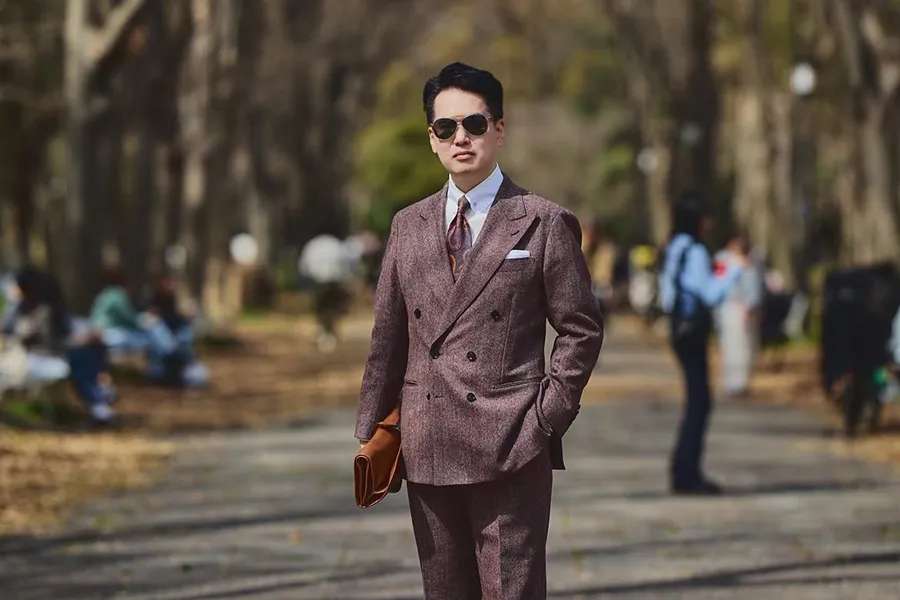
In this new edition of the Stefano Cau style interview, we meet Yousuke Yamashita, a Japanese court officer with a refined eye for menswear and a deep respect for sartorial culture. For him, elegance is not only about clothes—it is about discipline, values, and the harmony between tradition and individuality.
In our conversation, Yousuke reflects on the meaning of sartorial elegance today, the importance of fabrics and origins, and why timeless accessories like silk ties continue to embody respect, culture, and craftsmanship. His words remind us that style, much like duty, is a matter of intention and respect for detail.
What does sartorial elegance mean to you in the modern world of men’s fashion?
In recent years, I’ve felt that modern attire has become increasingly casual. To me, sartorial elegance in today’s world stands as an antithesis to the fast fashion trend. Tailoring is a form of non-verbal communication that embodies manners and decorum, and mastering it requires both experience and time. Therefore, a tailored style must possess not only high-quality fabrics and craftsmanship but also a sense of timelessness—qualities that fast fashion regrettably lacks.
If you had to describe your ideal tie in three words, which ones would you choose?
Classic, aesthetic sensibility, craftsmanship.
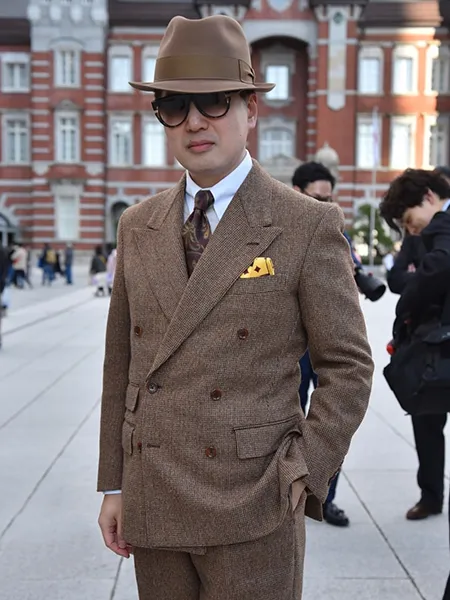
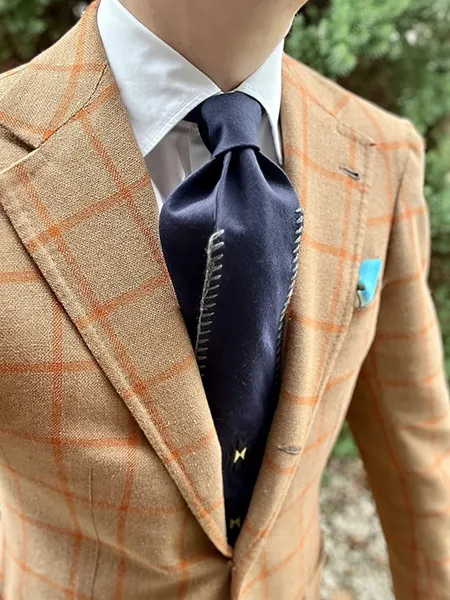
How important are fabric quality and origin when selecting an accessory?
These are essential. Fine fabrics not only enhance visual beauty but also serve as the foundation for creating a beautiful knot and dimple when tying a necktie.
From experience, I hold deep trust and respect for fabrics from Como in Italy, Nishijin in Japan, and the UK. When the beautiful patterns produced by these regions are tied to the historical style of their respective countries, I believe they elevate the psychological sense of pride in the gentleman who wears them.
Can you share a personal memory tied to a necktie or accessory that held a special meaning for you?
When I was just starting my career, I once arrived at work without a necktie in a rush. That afternoon, I had an important assignment, and I couldn’t bear to face it without a tie. During my 45-minute lunch break, I ran over a kilometer to a department store, purchased a navy solid tie, and rushed back to the office. That navy tie was a high-quality Italian piece—well beyond my means at the time. I still keep it in my closet today.
If your style had a soundtrack, which song or genre would best represent it?
There’s an old Japanese popular song called Tokyo Rhapsody, which was a major hit in 1936 sung by Ichiro Fujiyama, a beloved national singer. The lyrics evoke imagery reminiscent of tailored style, and they strongly convey that this era was a golden age of tailoring. Like the gentlemen of that time, I aspire to live a cultured life dressed in elegant suits, with grace and dignity.
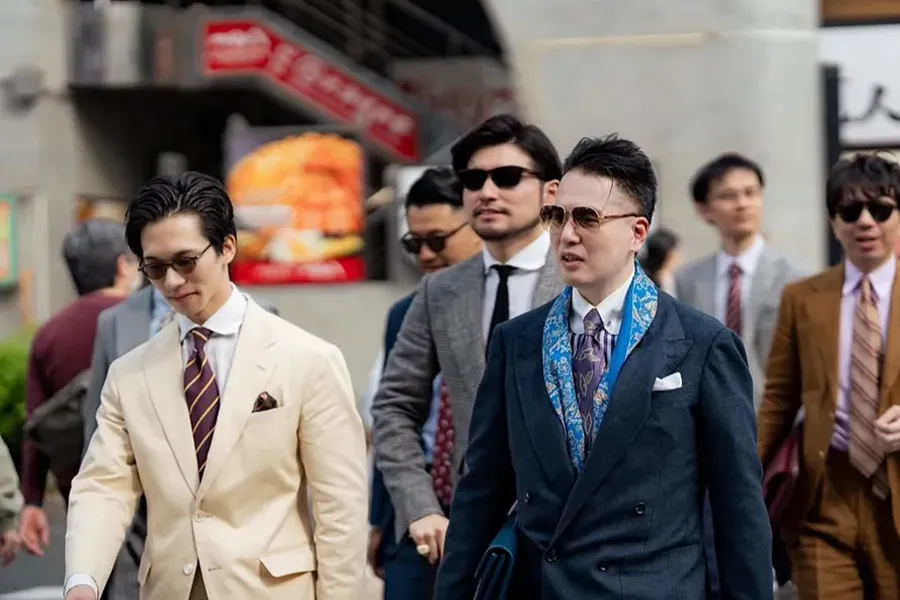
Do you believe a man’s tie can reveal something about his personality? If so, what?
For a necktie to harmonize beautifully with an outfit, its material, pattern, color, width, and length must align with both physical and cultural principles of beauty. For example, a tweed jacket calls for a wool tie; a wide-lapel jacket pairs best with a wide tie; and for ceremonial or somber occasions, a dark solid tie is appropriate. A person who understands and applies these rules is a gentleman of intelligence and etiquette.
In your opinion, what sets Italian elegance apart from other international styles?
Italian elegance, in my view, expresses the human instinct to celebrate life with honesty within the framework of classic style. This may stem from the warm climate and the vibrant natural beauty that shape the lovable temperament of the Italian people.
A single detail can change everything: what’s the one element you never overlook when putting together an outfit?
Color and fabric that harmonize with the season and landscape this is something I never overlook. When these elements feel natural, I believe I am accepted by friends and colleagues as part of the environment, offering them a sense of comfort.
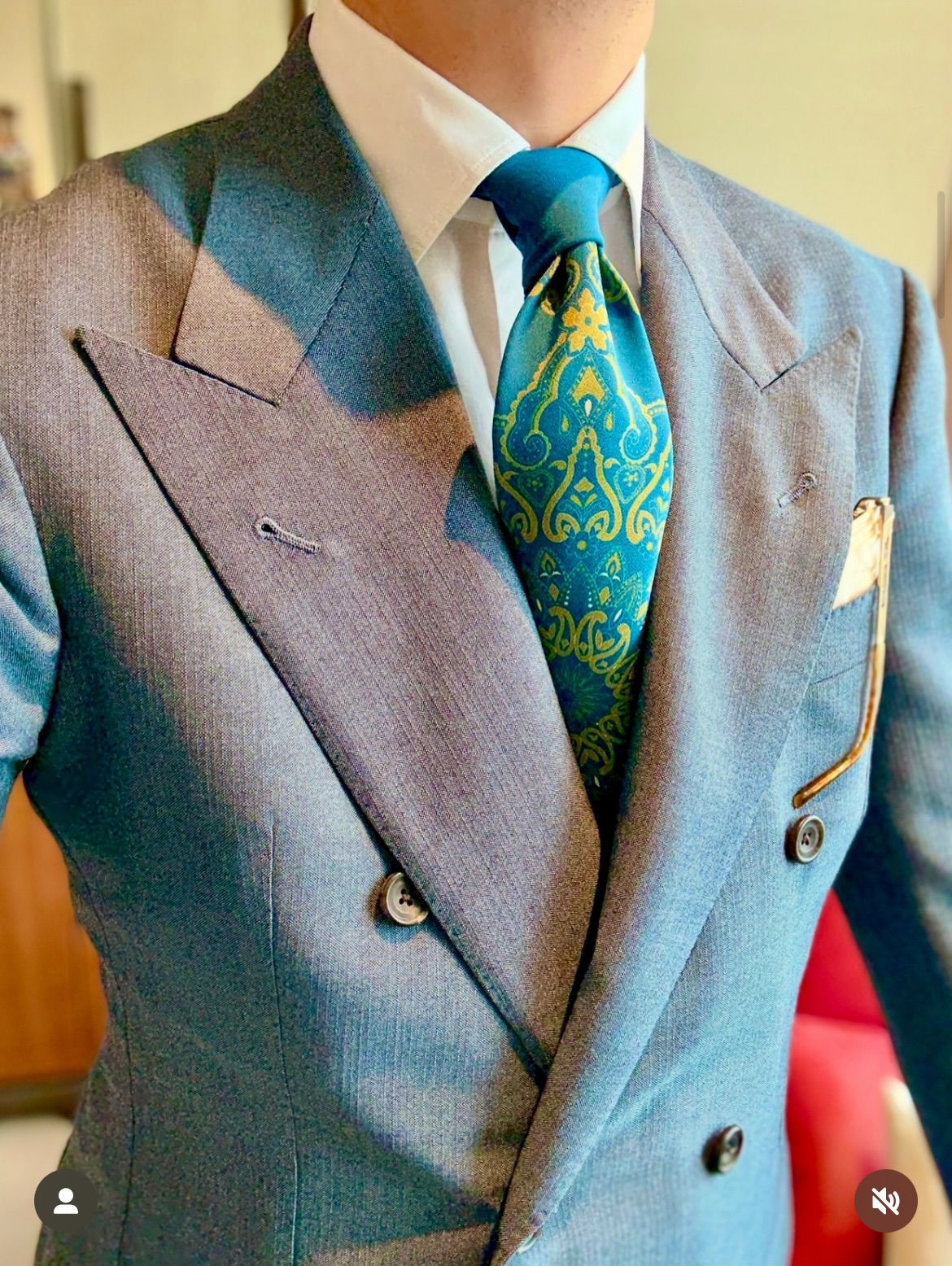
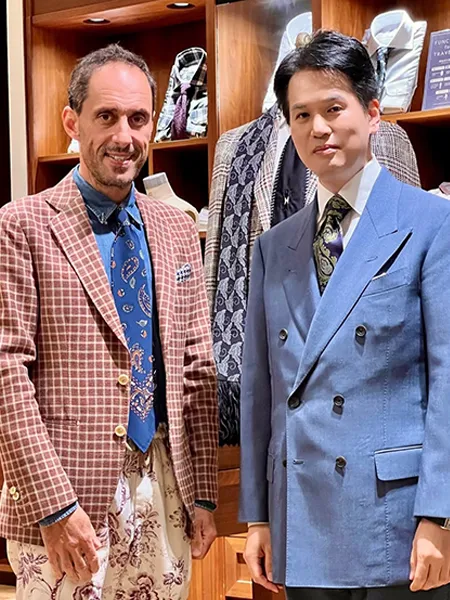
If you could raid the wardrobe of any historical or cultural icon, whose would it be and why?
As a Japanese person, it feels almost presumptuous to say so, but I would love to explore the wardrobe of Emperor Emeritus Akihito. Born in 1933, His Majesty lived through Japan’s turbulent times. He was born during the golden age of tailoring and left behind many photographs of himself in beautifully tailored attire during his youth. Even today, he continues to wear traditional tailored styles as a symbol of the nation. His wardrobe, crafted by Japan’s finest artisans with the highest level of insight and skill, surely holds unparalleled historical and cultural value.
How do you envision the future of men’s accessories? Do you believe the tie will continue to hold its iconic status?
It’s true that men’s accessories, including neckties, may be in decline. However, the demand for suits and ties will never vanish. Leaders in politics, business, and academia still embrace the suit. Even among ordinary people, the custom of wearing suits for important business or ceremonial occasions remains intact. The function of expressing respect for others through attire, cultivated over centuries in civilized society—is still very much alive. And I, along with many companions, continue to cherish this culture deeply.
Closing Thoughts from the Stefano Cau Style Interview with Yousuke Yamashita
Through this Stefano Cau style interview, Yousuke Yamashita reminds us that elegance is both cultural and universal. His reflections on fabrics, tailoring, and timeless accessories highlight how discipline and style can coexist, and how small details like a silk tie can reflect values of respect, pride, and dignity.
Missed the earlier conversations?
→ Matteo Formichetti – Elegance as Language
→ Austin – Classic Style from Dallas
→ Al Dresden Ramos – A Tenor’s Eye for Elegance