A Conversation on Timeless Style: Cory Sylvester — Stefano Cau Style Interview

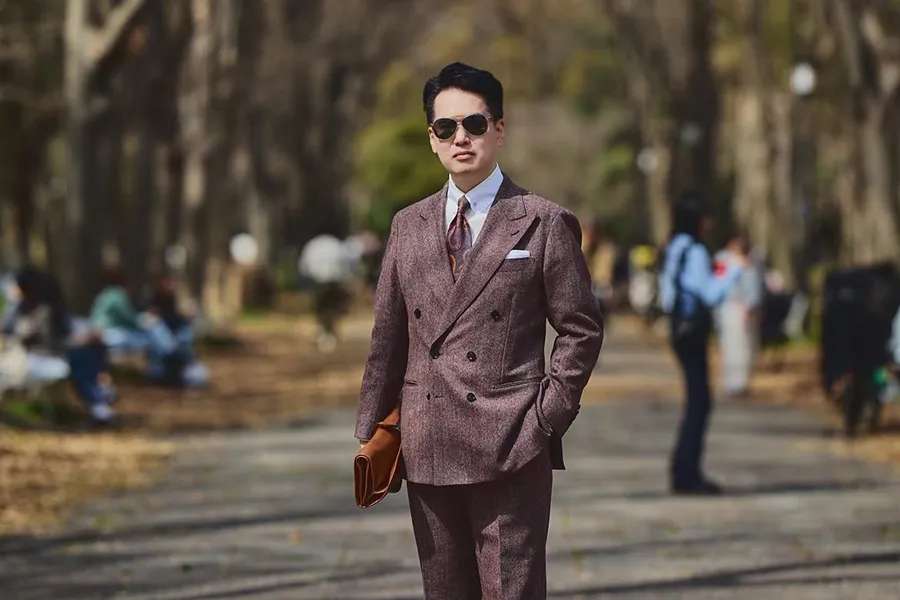
In this new Stefano Cau style interview, we meet Cory Sylvester, Chief Operating Officer and Partner at Michael Andrews Bespoke, one of New York’s most respected tailoring houses.
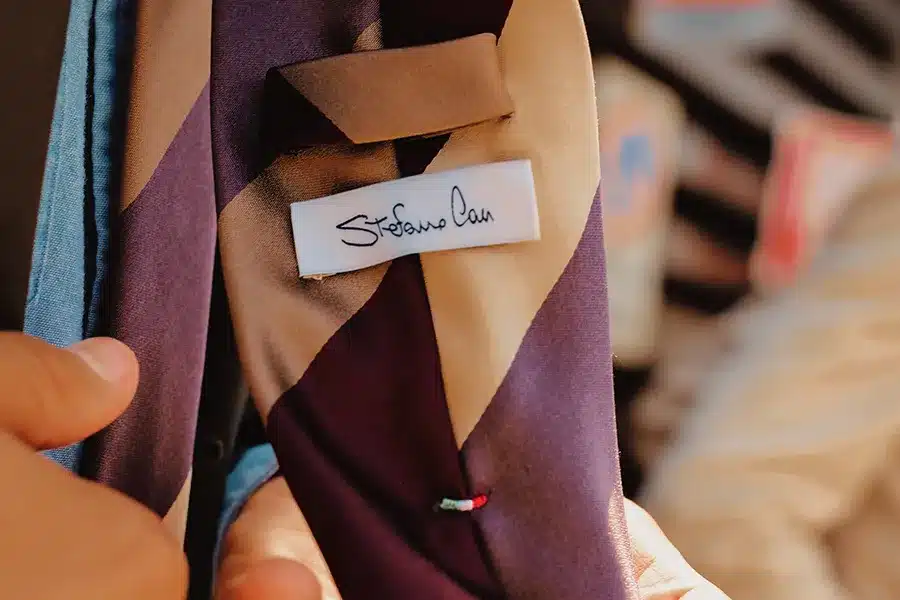
Since joining the company in 2012, Cory has helped shape a modern vision of bespoke menswear—one rooted in tradition yet open to evolution. Over the years, his friendship with Stefano Cau and Michael Andrews has inspired mutual respect and collaboration, culminating in a capsule collection of handmade silk ties for Angelo Ramos, a brand developed by the MAB team.
Before immersing himself in tailoring, Cory followed a path as unexpected as it was formative. A graduate of Eckerd College in St. Petersburg, Florida, he first majored in “playing baseball,” as he jokingly puts it. His passion for storytelling then led him to Chicago’s legendary Second City Theater, where he trained and worked as an actor before finding his true stage: the art of dressing well.
Today, he channels that same theatrical intuition into the details of men’s style precision, contrast, and expression. Between red meat, red wine, black coffee, and the timeless swagger of Serge Gainsbourg, Cory’s philosophy of elegance combines ease and attitude.
What’s the one sartorial piece that you believe is essential in every wardrobe?
Stonewash straight jeans. I’ve always favored Levi’s 505s, I’ve never been a button-fly guy. They’re democratic, timeless, and unapologetically cool. You can wear them with a T-shirt or a tuxedo and they always look badass. Great denim has that rare quality of getting better the more you live in it.
How do you choose the perfect tie to complete your look? Do you have a favorite fabric or pattern?
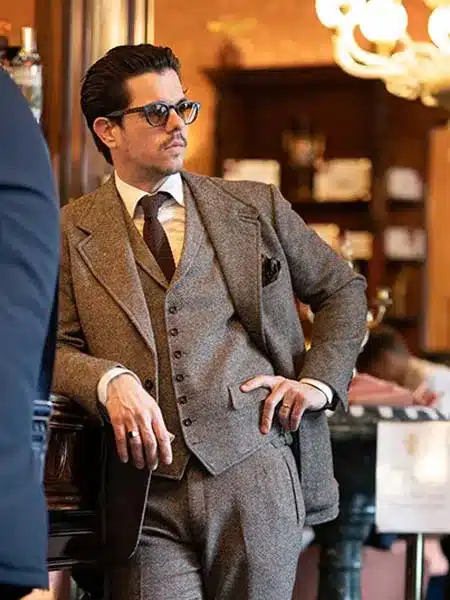
I love wine so much so that I often pair what I’m going to eat with what I want to drink, rather than the other way around. I take the same approach to neckwear. I’ll often choose the tie first, and let everything else fall into place around it.
If I could only have one tie, it would be a black silk knit—about six centimeters wide, square bottom. It’s Ivy, it’s rock and roll, it’s Americana, it’s continental, it’s all of that. It has attitude and versatility in equal measure, and it somehow looks great with everything.
In your opinion, what makes a tie truly stand out from the rest?
Individuality. These days, men wear ties because they want to not because they have to. That shift changes everything. I want that sense of rebellion reflected in what I wear. I don’t want to see myself coming and going.
What stands out to me in neckwear is something I haven’t seen before or something I don’t expect to see on anyone else. The tie should feel personal, maybe even a little subversive.
What was your first introduction to men’s fashion? Was there a moment or item that made you fall in love with sartorial style?
While I can’t recall my very first introduction to men’s style, I do remember always being most excited before the first day of school not to see my friends, and certainly not to see my teachers, but to decide what I’d wear. Now, I wouldn’t call many of those outfits “sartorial,” but the impulse was there.
That sensibility evolved later, when I was working in Chicago and New York as an actor and by “working actor,” I mean I was a terrible waiter. Somewhere along the way, I realized I was more fascinated by what the actors were wearing offstage and on the red carpet than by the performances themselves. That’s when I knew it was time for a career change and began to pursue tailoring.
Who is your main source of inspiration in the world of men’s fashion? Do you have a particular style icon you admire?
For me, it’s often the designers themselves, their own personal styles. Tom Ford, Ralph Lauren, Halston, what these guys wore to live. Google Calvin Klein bespoke suit and you’ll see what I’m talking about.
Ironically, some of the best men’s styling I’ve seen lately has come from women’s runways Celine, Saint Laurent, and Ralph Lauren especially. There’s a confidence and sensuality in how they interpret menswear that feels more exciting and relevant than most “men’s” shows today.
What advice would you give to someone looking to start building a sartorial wardrobe? Where should they begin?
Start with what feels authentic, not what feels expensive. Too many guys chase “the rules” before they ever figure out what they like. Buy less, but buy better and make sure it fits. Fit is everything.
If I were starting today, I’d begin with the essentials: great jeans, a navy blazer, a white shirt, and shoes that make you stand a little taller. From there, build slowly and intentionally. Your wardrobe should evolve the same way you do piece by piece, with purpose.
In your opinion, what sets Italian elegance apart from other international sartorial styles?
Italian style has this incredible tension between ease and precision. It’s confident but never stiff it can be formal, yet somehow still relaxed. The Italians understand that true elegance isn’t about perfection; rather, it’s an ease with which you live. And that’s reflected in both the clothes and how they’re worn. It’s less about rules of style and more about the rhythm of life.
Let’s talk details: how important are accessories like ties, cufflinks, or pocket squares in completing an outfit?
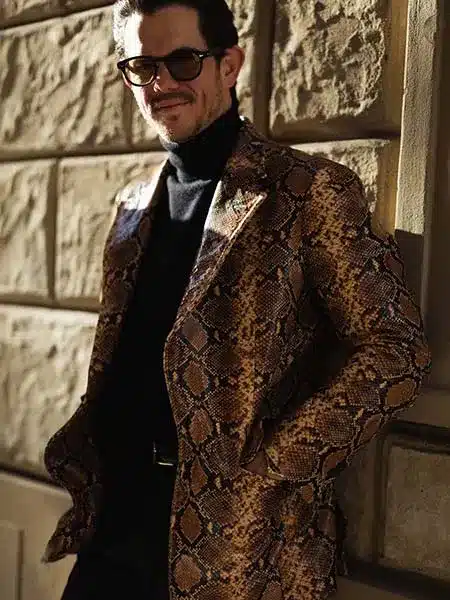
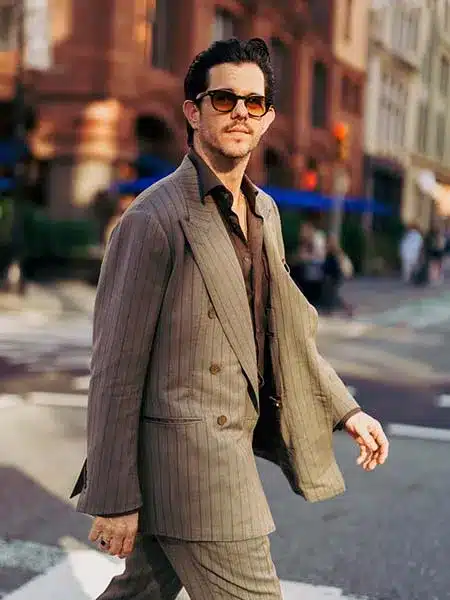
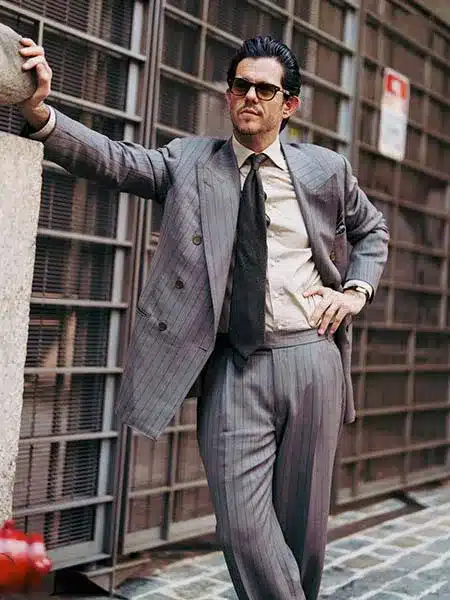
The details are where the personality lives. Anyone can buy a suit, but how you finish it says everything. Accessories are the punctuation marks of style they can change the tone entirely.
A tie can sharpen, a pocket square can soften, and cufflinks can say, “I’m paying attention.” I don’t think of them as afterthoughts; they’re expressions of individuality. The best-dressed men I know use accessories the way good writers use adjectives sparingly, but with impact.
Is there a particular event or occasion where you wore an outfit that made you feel truly impeccable? What did you wear?
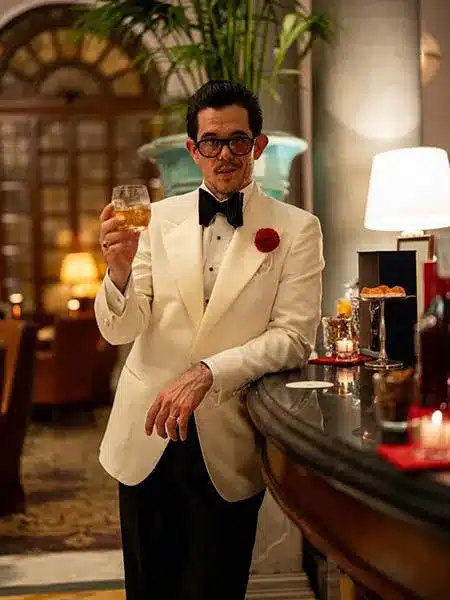
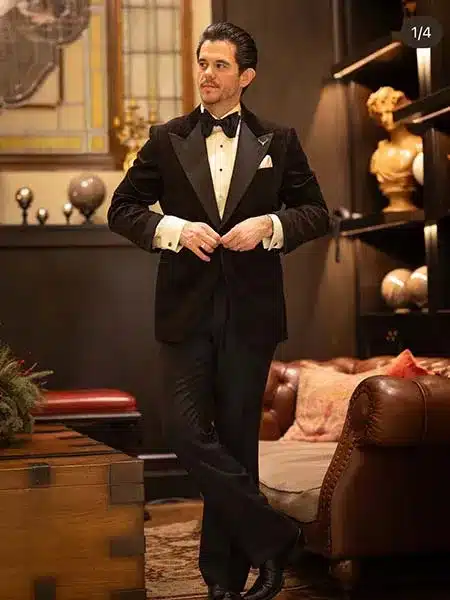
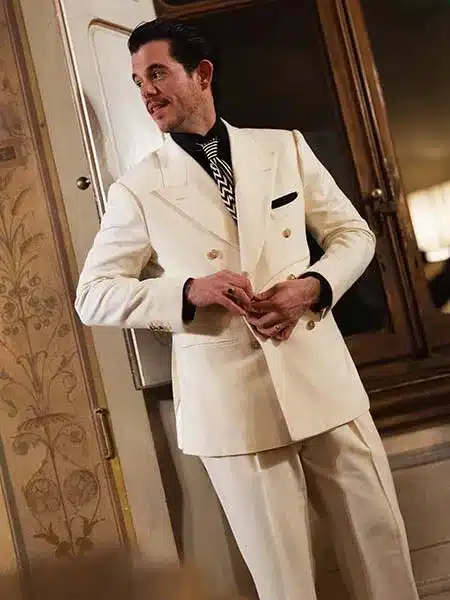
Yes, just this past summer in Paris, my wife Alice and I attended the most impossibly chic wedding celebrating our friends Chris and Philip. The theme was Paris in Black and White, and guests were expected to oblige.
I had planned to wear my ivory dinner jacket, but when Alice brought out a stunning white dress from her own label “Atelier Fern” I realized the off-white of my jacket wasn’t going to cut it. So I pivoted. I went with a 6×1 double-breasted tuxedo with low-slung peak lapels and double-pleated trousers. Instead of a traditional tuxedo shirt and satin bow tie, I wore a black tank and a silk scarf with white polka dots.
Alice still stole the show, of course, but I felt great: fully at ease, fully myself, and completely in command of my attire.
How do you see the future of men’s sartorial fashion? Which trends do you think will gain the most relevance in the coming years?
I think we’re moving toward a more expressive era of menswear one where individuality takes precedence over dress codes. The rules have loosened, and that’s a good thing. Men are rediscovering the joy of dressing for themselves, not for the job, the occasion, or the expectation.
We’ll see tailoring evolve softer, more personal, more lived-in and then it will evolve again. While men are wearing fewer suits than previous generations, the suits they are buying are either vintage or custom. Both trends I’m happy to see continued.
Closing Thoughts
This Stefano Cau style interview with Cory Sylvester captures the intersection of art, personality, and precision that defines modern tailoring. His approach to menswear, rooted in authenticity and expression, echoes the same philosophy that drives Stefano Cau’s handmade silk ties: individuality, craft, and confidence.
From denim to double-breasted tuxedos, Cory proves that true style isn’t about following rules it’s about writing your own. His friendship with Stefano and Michael Andrews embodies the global language of Italian elegance and the enduring relevance of craftsmanship in a changing world.
Explore our collection of handmade silk ties and pocket squares, crafted in Como to celebrate the art of individuality
Missed the earlier conversations?
→ Matteo Formichetti – Elegance as Language
→ Austin – Classic Style from Dallas
→ Al Dresden Ramos – A Tenor’s Eye for Elegance
→ Yousuke Yamashita – The Discipline of Sartorial Elegance